Crafting Your Brand? Define Your Ideal Client FIRST
This post is about why the first step to crafting your brand is to define your ideal client by creating a Client Persona. I share how ideal clients should feel when interacting with a brand, common branding mistakes small businesses make, and how a clear and specific client persona strengthens a company’s brand identity. I also have a link to a free branding resource: Client Persona Template So the Right People Buy from You.
When small business owners think about branding, they often jump straight to visuals: Logos, colors, typography, and website design. And I completely understand. The visuals is the FUN part! It’s what we see and what a majority of us think of when we discuss the concept of “BRANDING.” And yes, while those visual elements are important and very much a part of the branding process, they’re not where effective branding begins.
If you want a strong, memorable brand identity that attracts the right customers and converts them into loyal clients, there’s one step you must take first:
Define your ideal client.*
Before you write a word of copy, design a single pixel, or invest in brand design, you need crystal-clear clarity on who you’re designing for. Otherwise, you’re branding in the dark.
And before you even think about logo designs, put that pencil down. Those will most likely change as soon as you define your ideal client.
And if you’re in a position where you’ve already launched and are looking to refresh and rebrand your company, defining your ideal client is where you would start as well. No matter if you’re one year into your launch or ten years, always start with defining WHO you are helping.
*NOTE: If you’re in the retail industry, you might use the word customer over client. Customer implies a person on the receiving/purchasing end of a short-term transaction. Client is usually someone
you have a long-term, ongoing relationship with. And if you’re in another industry like nonprofit, then replace “customer” or “client” with the name of the group you serve or help. For the sake of consistency for this blog post, I’ll use the word, “client.”
Why Defining Your Ideal Client Comes Before Writing Brand Messaging and Designing Brand Visuals
Your brand isn’t for everyone. It’s for a specific group of people who need what you offer and are willing to pay for it.
When you clearly define your ideal client:
- Your messaging becomes more confident and specific
- Your brand identity feels intentional, not generic
- Your marketing resonates emotionally with the right people
- Your customers recognize themselves in your brand
Without this clarity, many small businesses end up with branding that looks “nice” but doesn’t actually connect, or convert.
The most effective brands have clearly defined ideal client profiles. You might also have heard of this referred to as “client personas” or “client avatars.” Whatever you name it, a client persona includes:
- Demographics
- Psychographics
- Behaviors & Habits
- Pain Points
- Desired Outcomes & Goals
- Buying Process & Objections
- Relationship With Your Brand
Creating a client persona is important because it gives your brand clarity, direction, and consistency.
A client persona will also help determine the voice and tone of your brand, since how you speak to one person from a certain background and experiences will be different than how you speak to another person with a different background and experiences.
Branding Is About Connection, Not Just Aesthetics
At its core, branding is about building trust and recognition. Your ideal clients should feel like your brand is speaking directly to them and gets them.
When you know:
- What your clients struggle with
- What motivates their decisions
- What language they use
- What they value and fear
…you can design a brand that feels personal, relevant, and human.
This insight influences everything: Your tone of voice, visual style, brand positioning, and even the services or products you offer.
That’s how powerful brands are built; not by guessing, but by understanding.
Think about how you feel when you encounter a brand that feels like it is speaking directly to you. When this brand speaks about a very specific problem you have, you feel drawn to the brand. And depending on your problem, you will be very willing to pay their asking price in order to solve your problem. Whether we’re talking about a low ticket problem like needing an purifying air freshener for your home or sparkling water that actually tastes delicious while being low sugar; or addressing a high ticket problem like needing a new car or searching for a new private school for your child after moving to a new city, you’re looking for very specific language that speaks to your sensibilities and taste.
Common Branding Mistake Small Businesses Make
One of the most common mistakes I see small business owners make is saying:
“My brand is for everyone!” or “I don’t want to exclude anyone.”
The truth?
When you try to appeal to everyone, your brand ends up resonating with no one.
Strong brands are clear about who they serve and who they don’t. That clarity is what helps the right clients self-select and confidently choose you over competitors. In fact, one of the exercises I walk my clients through during a Brand Discovery Session is, after we define who they are, I ask them to list everything that they aren’t. This helps us set clear boundaries within which to craft their brand messaging and design their brand visuals for their overall brand identity.
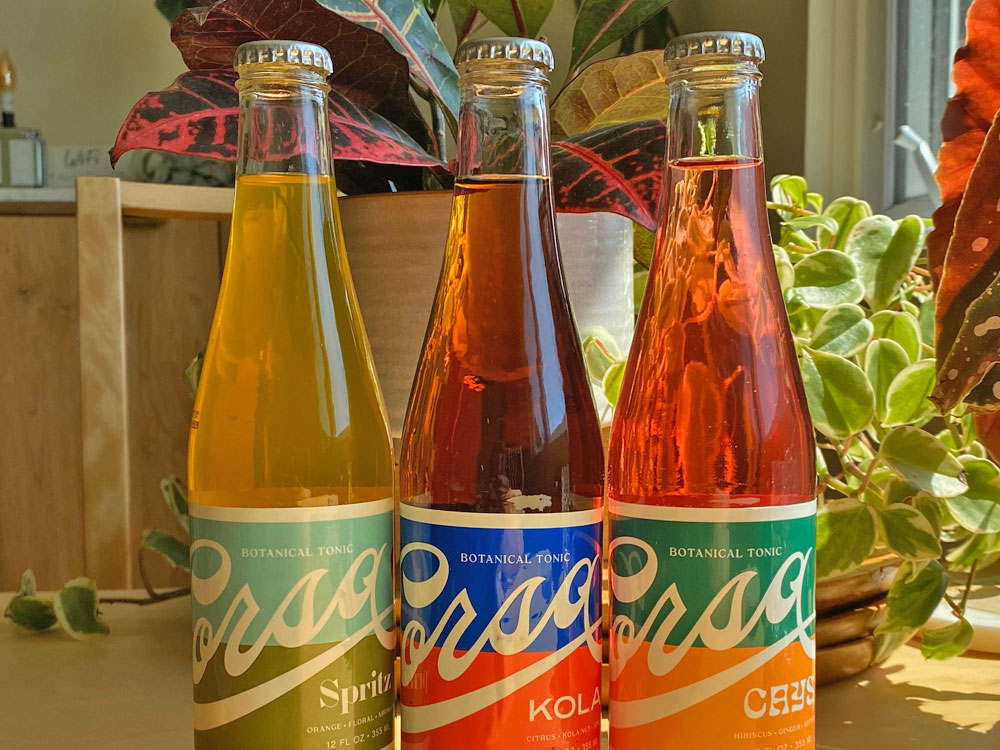
Think about your most favorite brands. Why do you feel drawn to them? Beyond the visuals and aesthetics, think about the language they use. Since I have my branding and design roots in the beverage industry, I’ll use beverage brands as examples:
- Liquid Death
- Poppi
- Mountain Dew
- Dom Perignon Champagne
- Kool-Aid
Can you picture the kind of person each of these brands is designed to appeal to? I bet you can.
And if you’re a 28-year-old single male looking at the Kool-Aid bullet point on this list and thinking, “Hey, Kool-Aid isn’t just for kids. I love it and drink it, too!” Then, awesome! You can be sure that Kraft Heinz (who owns Kool-Aid) loves you for helping them take a bit more of the market share. But in a crowded market, Kraft Heinz, and other beverage brands, use crystal-clear and very specific brand messaging and brand visuals for a very specific target audience so they can sell. (In this case, kids and families.) The market is always going to be wider than the target.
How a Clear Client Persona Strengthens Your Brand Identity
A well-defined client persona acts as a filter for every branding and marketing decision you make.
It helps you:
- Write messaging that speaks directly to your clients’ needs
- Create brand design that reflects their tastes and expectations
- Build consistent marketing that attracts aligned customers
- Save time and money by avoiding misaligned branding choices
Instead of asking, “What do I like?”
You start asking, “What will resonate with my ideal client?”
That shift alone can transform your brand.
Even if the ideal client ends up being you, then define this. Write down your demographics, psychographics, behaviors, habits, pain points, and goals. It’s important to actually see all of this on paper so that it’s data vs. something that’s vague and lives only in your mind.
If you’re doing this yourself, it might help to have a trusted friend or colleague help you do this. As I like to say, “You can’t read the label from inside the bottle.”
Start with the Right Foundation
If you’re crafting or refining your brand identity, defining your ideal client isn’t optional. It’s foundational.
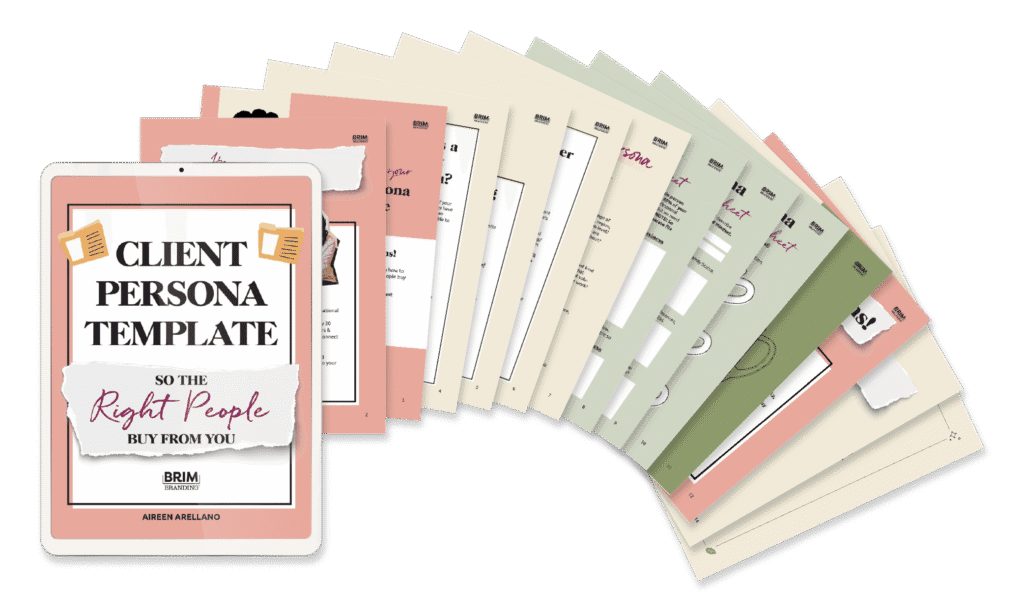
Luckily, I’ve made this super easy for you. To help you get clarity, I’ve created a free, easy-to-use resource that walks you through this process step by step.
👉🏽 Download my free guide:
“Client Persona Template So the Right People Buy from You”
This self-guided template will help you:
- Clearly define your ideal clients
- Understand what drives their buying decisions
- Align your branding and messaging with the right audience
- Build a brand that attracts the customers you actually want
Whether you’re a small business owner, founder, or brand stakeholder, this resource will give you the clarity needed to build a brand that connects and converts.
This is the exact framework I use with all of my brand identity clients in a variety of verticals and industries, and with several organization sizes, from small business owner to founder to brand stakeholder.
Final Thought
Before you invest in brand design, ask yourself this:
Do I know exactly who my brand is for?
Can I picture them in my head? Can I give them a name? Am I friends with them? Wait; is this person me? If the answer is anything less than crystal clear, start there. Your branding and your business will be infinitely stronger because of it.
This post was all about why defining your ideal client is a foundational first step when crafting your brand. It also includes a free branding resource titled, ‘Client Persona Template So the Right People Buy from You‘ available for instant download.

SIGN UP
INSTANT, FREE TEMPLATE JUST FOR YOU!
We just finished purging a bunch of subscriptions, so we get it. That’s why we promise to email you only when we have valuable branding tips.

Get your INSTANT, FREE download of Brim Branding’s
Client Persona Template So the Right People Buy From You.
Creating a client persona is important
because it gives your brand clarity,
direction, and consistency.